

Changing Consumer Spending Patterns: What Small Businesses Need to Know
How inflation, tighter budgets and changing priorities are reshaping the way Nigerians buy, and what SMEs need to do about it.

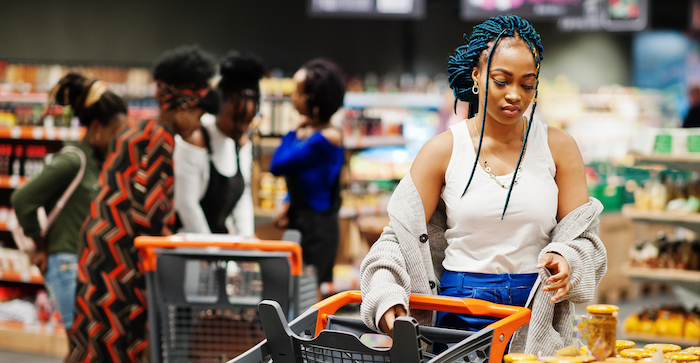
Changing Consumer Spending Patterns: What it Means for Your Business
There was a time when a customer could walk into a shop, pick the brand they liked and pay for it without doing too much mental mathematics but there has been some changes in consumer spending.
Today, the same customer may pick up a product, check the price, put it back, compare it with another brand, consider buying a smaller quantity and eventually decide whether they need it at all.
The money has not disappeared from the economy. But consumers are becoming much more deliberate about where their money goes.
Nigeria’s food inflation reached 16.96% in May 2026, while rising food, transport and household costs continue to put pressure on disposable income. The result is not simply reduced spending. It is different spending.
For small businesses, you need to know what this means .
Because when customers change how they spend, businesses that continue selling the same way eventually feel the difference.
Consumer Spending: The Customer Is Still Buying, But…
Consumers are becoming more conscious of the value attached to every naira they spend.
That means the question is no longer simply, “Do I want this?”
It is increasingly, “Is this worth what I am about to spend?”
According to BusinessDay Gen Z poll, it found that 75.8% of respondents said they switch to cheaper alternatives when prices rise. That creates a new problem for businesses.
A drop in sales does not always mean customers have stopped wanting the product. They may simply be changing the size, frequency, brand or timing of their purchase.
A customer who bought a large pack every month may now buy the smaller pack twice.
Someone who ate at a restaurant every weekend may now come once a month.
Someone who always bought the premium version may move down one tier while remaining in the category.
The business that only watches total sales will see a decline but the business that studies the behaviour behind that decline gets useful information.
Price Is Important, But Value Is Becoming the Real Battleground
The easiest response to changing consumer spending is to cut prices.
It is also one of the easiest ways to create a bigger problem.
A small business cannot permanently fight rising costs by making its own margins smaller.
The smarter response is to rethink value architecture, meaning the different ways customers can buy from the business at different price points.
This could mean smaller packs, entry-level versions, bundles, flexible quantities or different service tiers.
Refusal to do that means consumer buying smaller quantities can easily move away from businesses that only offer large packs towards competitors offering more accessible options.
But affordability is not the only thing customers are evaluating.
Trust still matters.
As cited by Matog Consulting, NielsenIQ data showed that almost six in ten Nigerian shoppers switched brands because of price increases, yet 99% still considered trust important, with product quality and consistency among the major drivers.
That tells businesses something important.
Customers may trade down on price without automatically trading down on standards.
If a business wants customers to keep paying its price, it needs to make the value obvious.
Small Businesses Need to Watch Behaviour, Not Just Revenue
Revenue tells a business what happened.
But customer behaviour can tell it why.
A business experiencing declining sales should be asking better questions.
Are customers buying less or buying less often?
Why are they moving towards cheaper products?
Are certain products still selling because customers consider them essential?
Are customers asking for smaller quantities?
Are promotions generating genuine loyalty or simply attracting people who disappear when the discount ends?
These questions can reveal changes that a monthly sales report may hide.
The source also highlights how the contraction of small digital loans affected consumer purchasing power, particularly for categories that had benefited from consumers using short-term credit to supplement their income.
That is another reason SMEs cannot treat consumer behaviour as static.
The customer does not make purchasing decisions in isolation. Income, credit availability, transport costs, household expenses and expectations about future prices can all influence what eventually reaches the checkout.
Businesses therefore need to pay attention to the customer’s ability to buy, not just their willingness to buy.
That difference can completely change a product strategy.
The Businesses That Adapt Will Not All Compete on Price
Changing consumer spending patterns do not mean every business should become cheaper.
They mean businesses need to become more flexible.
A food business could offer different portion sizes instead of discounting everything.
A fashion brand could introduce accessible pieces without destroying its premium line.
A beauty business could allow customers to book individual services rather than only expensive packages.
A household-products business could offer smaller packs for customers who cannot comfortably afford bulk purchases.
The goal of this is to understand what customers are protecting, what they are sacrificing and what they still refuse to compromise on.
That last part is especially important.
When money becomes tighter, customers do not necessarily abandon everything they love. They become more selective about what deserves their money.
For one customer, that may be food quality.
For another, durability.
For another, convenience.
For another, trust.
If you understand those priorities then you can redesign your offerings around them.