

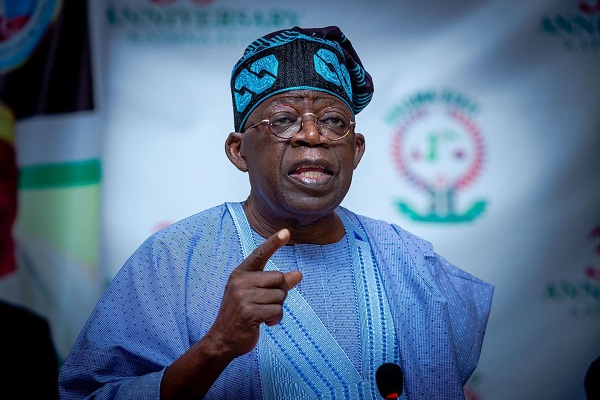
Nigerians in Ibadan, Abeokuta and Ilorin have given mixed assessments of the administration of President Bola Tinubu as the country marks its 66th Independence Anniversary.
The respondents, who spoke on the administration’s reforms across various sectors, highlighted areas where they believed progress had been recorded, while also identifying challenges requiring further attention.
The Federal Government has described the anniversary as an opportunity to reflect on the country’s journey and consolidate economic reforms to achieve greater stability and shared prosperity. (Federal Ministry of Information)
A financial expert, Mr Tunji Adepeju, said the reforms introduced since May 2023 had been difficult but were laying the foundation for stronger economic growth.
He identified the removal of petrol subsidy and foreign exchange reforms as major decisions that had altered the structure of the economy.
According to him, relative stability in the exchange rate had improved businesses’ ability to plan and make investment decisions.
Adepeju also cited increased government revenue as another positive outcome, saying higher receipts from taxation, oil and other sources had strengthened the government’s ability to meet its obligations, including salaries and pension payments.
In the health sector, Prof. Olayinka Atilola, National Publicity Secretary of the Nigerian Medical Association (NMA), said the administration had recorded some achievements.
He cited the Nigeria Health Sector Renewal Investment Initiative (NHSRII) and the Health Sector Strategic Blueprint 2024-2027 as steps towards better coordination of health programmes and resources.
He also noted the expansion and revitalisation of Primary Health Care (PHC) facilities.
However, Atilola said the removal of fuel subsidy, naira devaluation, inflation and high interest rates had increased the cost of healthcare.
The Chairman of the NMA in Oyo State, Dr Olufemi Aworinde, also acknowledged progress in the health sector but said many ordinary Nigerians were yet to feel its full impact.
He cited government-reported investments in PHCs, maternal and child health interventions, emergency obstetric care and recruitment of health workers, but said high out-of-pocket healthcare spending remained a major concern.
Similarly, Dr Uthman Adedeji, President of the Association of Resident Doctors, University College Hospital, Ibadan, said healthcare reforms remained difficult because of inadequate funding.
He, however, said medical tourism expenditure had reportedly declined since 2023, while urging the government to address rising drug prices and the continued loss of health professionals to migration.
On education, Prof. Julius Ademokoya of the University of Ibadan commended the administration’s policies, particularly the Nigerian Education Loan Fund (NELFUND).
He said the student loan scheme had reduced the financial burden on parents and that improved remuneration for university workers had contributed to greater stability in the sector.
However, an Ibadan-based legal practitioner, Mr James Ajibola, said little progress had been made in the criminal justice system.
He cited shortages of manpower, poor remuneration and the large number of cases awaiting adjudication as persistent challenges.
On infrastructure, the Federal Controller of Works in Oyo State, Mr Victor Aina, said the administration was handling nearly 50 federal road projects in the state, covering reconstruction, rehabilitation and emergency works.
He listed the completed Aawe-Iwo Ate, Ayegun-Oleyo and Saki-Okerete roads, among others, while identifying the Oyo-Ogbomoso, Ibadan-Oyo, Ibadan-Ife-Ilesa and Ibadan-Ijebu-Ode roads as some of the major ongoing projects.
Residents and road users also commended some of the projects, saying improved roads had eased transportation and helped farmers move their produce.
However, residents along the Ibadan-Abeokuta Road appealed to the Federal Government to commence its reconstruction.
In Ogun, the Speaker of the state House of Assembly, Rt. Hon. Oludaisi Elemide, said Nigeria had made progress since independence but still had significant challenges to overcome.
He attributed some of the country’s difficulties to leadership, followership and a culture of shifting responsibility, while calling for greater collective commitment to national development.
Mr Abiodun Ogunjimi, Secretary of the All Farmers Association of Nigeria (AFAN), Ogun Chapter, urged the Federal Government to sustain interventions in agriculture, particularly in mechanisation, irrigation, inputs and financing.
He said recapitalising the Bank of Agriculture could also improve farmers’ access to credit.
The Secretary-General of the Ogun State Muslim Council, Alhaji Kamaldeen Akintunde, acknowledged progress in the foreign exchange market and education, particularly vocational and technological training.
He, however, called for stronger action on insecurity, food prices and energy supply.
In Ilorin, the Chief Imam of Uthman bn Affan Mosque, Alhaji Yusuf Al-Fulani, said Kwara had benefited from increased federal allocations following the removal of fuel subsidy and exchange-rate reforms.
He said the additional resources had enabled the state government to undertake road, education and health projects without excessive borrowing.
Dr Musbaudeen Lawal, Chief Executive Officer of Musby Pharmaceutical Company, also noted ongoing rehabilitation of federal roads in Kwara, including the Ilorin-Jebba, Ilorin-Ogbomoso and Ilorin-Kabba corridors.
Malam Usman Mahmud of AFAN, Kwara Chapter, commended federal agricultural interventions, including fertiliser support and dry-season farming initiatives, saying they had benefited smallholder farmers.
The Kwara Director of the National Orientation Agency, Alhaji Yakubu Ibrahim, identified NELFUND, free emergency surgeries for women and children, and measures aimed at reducing dialysis costs among the administration’s notable initiatives.
He also cited efforts to strengthen security and maintain stability in the university system.
A former state Director of NOA, Alhaji Abdulganiyu Dare, also commended the administration, particularly on pension issues, while appealing for the reconstruction of the Ohan and Moro bridges to improve transportation and agricultural activities.
Overall, the respondents presented varied views of the administration’s performance, acknowledging progress in areas such as infrastructure, education, healthcare, agriculture and economic reforms, while pointing to continuing challenges including inflation, healthcare costs, insecurity, unemployment, drug prices and pressure on household incomes.
The Federal Government says the next phase of its reform agenda is focused on translating economic stabilisation into jobs, investment, increased production and improved living standards. (Federal Ministry of Information)
Credit NAN: Texts Excluding headlines