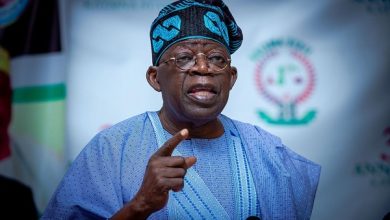

The Director-General of the World Trade Organization, Dr Ngozi Okonjo-Iweala, has offered a reassuring counter-narrative to the gloom surrounding global trade policy, declaring that the vast majority of commerce between nations still moves under the rules-based system her organization oversees.
Speaking in Abuja on Thursday at the ongoing 7th Africa Emerging Markets Forum, Okonjo-Iweala told delegates that around 72 per cent of global goods trade continues to flow on core WTO most-favoured-nation tariffs, even as tariff hikes and policy uncertainty rattle markets elsewhere. The forum, jointly hosted by the Central Bank of Nigeria, the Emerging Markets Forum and the Centre for the Study of Economies of Africa, has drawn policymakers and economists grappling with how African economies can navigate a fraying global trading order.
An additional 16 per cent of trade, she said, moves under terms built on WTO foundations, largely tariff preferences from bilateral and regional agreements. Taken together, her figures suggest that fears of a wholesale collapse in multilateral trade may be overstated, even as headline tensions between major economies dominate the news cycle.
The numbers behind the resilience are striking. World merchandise trade grew by 4.6 per cent in nominal terms, a figure Okonjo-Iweala attributed to surging demand for AI-related goods that helped offset the drag from tariff increases. Services trade fared even better, expanding by 5.3 per cent, with digitally delivered services, everything from software to remote consulting, growing at almost 6 per cent. She noted that global goods trade volumes in 2025 stood more than 12 per cent above 2019 levels, the year before the pandemic upended supply chains, while services trade volumes had climbed 31 per cent over the same period.
Not all the news was positive. Okonjo-Iweala used part of her address to reflect on the fallout from the Strait of Hormuz crisis, a chokepoint disruption that has reverberated through global energy and food markets. She said countries have generally responded by easing rather than tightening trade restrictions, lifting barriers on oil and gas, and scrambling to find alternative routes for shipping oil and fertilizer out of the affected region. But she was candid about the limits of that response, acknowledging that these measures have not been enough to compensate for the closure of the strait, which has hit the world, and especially vulnerable African countries, with higher energy, fertilizer and food prices. The disruption, she added, exposed how little resilience had been built into global supply chains to cushion a shock of this scale.
Despite pockets of strategic rivalry affecting sensitive products and specific bilateral relationships, Okonjo-Iweala argued that most countries are still choosing interdependence over fragmentation, even if that interdependence now plays out through what she called concentric circles of closer or looser integration rather than a single, uniform global market.
She pointed to the Global South as the clearest evidence of this shift. South-South trade, she said, has grown from under a tenth of global trade in 1995 to roughly a quarter today, a transformation reflected in the sheer volume of trade diplomacy among developing nations. Of the 384 regional trade agreements formally notified to the WTO, 49 per cent involve developing countries alone, and among a further eight agreements yet to be notified, the South-South share appears to run even higher. Twenty-two economies currently outside the WTO’s 166-member fold, she noted, are actively working toward accession, a sign that the institution’s pull remains strong even amid criticism of its effectiveness.
For African policymakers gathered in Abuja, the message carried a clear undertone: multilateralism is bruised but not broken, and the continent’s growing weight in South-South trade gives it a stake in ensuring the system holds.