


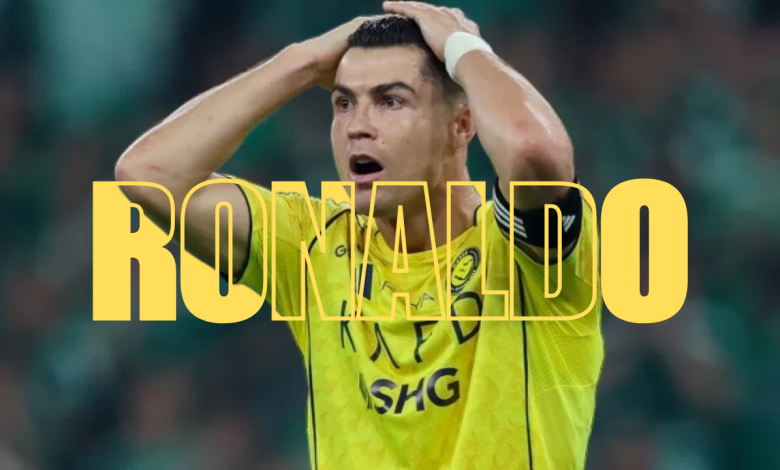
Cristiano Ronaldo has experienced almost every kind of football night during his remarkable career, but Al Nassr’s latest Champions League defeat has added a new question to the conversation surrounding the 41-year-old superstar.
Al Nassr suffered a heavy 4–0 defeat to Al Ain in the AFC Champions League Elite on Tuesday, September 15, 2026, in a result that left fans questioning whether the Portuguese forward can still perform at the highest level.
For a player who has built his reputation on scoring goals and delivering when the pressure is greatest, the result was particularly painful.
Ronaldo has spent much of his career turning difficult games around. He has won league titles, Champions League trophies and individual awards, while repeatedly proving that age is not necessarily a barrier to elite performance.
But football eventually catches up with every player.
At 41, Ronaldo is now at a stage of his career where every disappointing performance attracts a bigger question about how much longer he can continue.
Is this a sign that Ronaldo should retire?
Not necessarily.
One heavy defeat should not erase decades of extraordinary achievement, and a 4–0 loss is rarely the responsibility of one player.
Al Nassr’s defeat was a team failure, with Al Ain taking control of the match and punishing their opponents. Ronaldo could not provide the attacking spark his team needed, but expecting one player to rescue a team from every difficult situation would be unrealistic.
However, the defeat does raise a legitimate question about what comes next.
Ronaldo is no longer the explosive player who dominated European football in his prime. Age naturally affects speed, recovery, movement and the ability to maintain the intensity required at the highest level.
The difference is that Ronaldo has adapted his game.
Rather than relying entirely on pace, he has increasingly focused on positioning, movement inside the penalty area and his extraordinary ability to finish chances.
That adaptation has allowed him to remain a dangerous goalscorer well beyond the age when most elite forwards would have retired.
The bigger question is motivation
Perhaps the biggest reason retirement remains a topic of discussion is not Ronaldo’s ability to score goals.
It is whether he still has something left to prove.
For more than two decades, Ronaldo has chased records, trophies and personal milestones. He has won the Champions League five times, claimed multiple Ballon d’Or awards and become one of the highest-scoring players in football history.
At this point, retirement would not represent failure.
It would simply mark the end of one of football’s greatest careers.
But Ronaldo has repeatedly shown that he does not easily walk away from challenges.
As long as he believes he can contribute, he is unlikely to retire simply because of one humiliating defeat.
One defeat cannot define Ronaldo
The 4–0 defeat will hurt Al Nassr and its supporters, but it should not become the final judgment on Ronaldo’s career.
Great players are often remembered not for their worst nights but for how many times they responded after them.
The real test will be what happens next.
Can Ronaldo respond with goals and stronger performances? Can Al Nassr recover from the defeat and challenge for major honours? And perhaps most importantly, can Ronaldo still influence matches when the biggest moments arrive?
Those questions will be answered on the pitch.
For now, the 4–0 defeat is a warning sign, not a retirement announcement.
At 41, Ronaldo may no longer be the unstoppable force he once was. But writing the final chapter of his career after one bad night could be just as premature as expecting him to remain at his peak forever.
The question is no longer whether Ronaldo was great. That has already been answered. The question is how long he can remain great enough to keep going.