
Nigeria Govt. Reaffirms Commitment to Ease of Doing Business Reforms
Minister Enoh Highlights PEBEC's Role and Focus on Investor Confidence


The Federal Government has reaffirmed its commitment to improving the ease of doing business, ensuring regulatory stability, and fostering strategic alliances to boost Nigeria’s economic competitiveness.
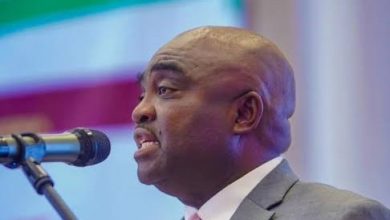
Sen. John Enoh, Minister of State for Industry, Trade and Investment, said this at the Renewed Hope Global Virtual Conference 2025.
Enoh said that while significant progress had been made, the government was focused on streamlining business operations, reducing bottlenecks, and enhancing investor confidence.
The minister reiterated the role of the Presidential Enabling Business Environment Council (PEBEC) in driving reforms to simplify business processes.
“The PEBEC, previously chaired by the Minister of Trade and Investment, Dr Jumoke Oduwole, plays a crucial role in improving the business climate.
“The President has recently appointed a new head to continue this important work.
” Government policies are continuously evolving to ensure Nigeria remains competitive within the sub-region, the continent, and the global economy.
“While we have not achieved everything yet, the goal is clear to create a business environment that supports industrial growth, attracts investment, and enhances job creation,” he said.
The minister said that policy predictability and regulatory transparency were essential for investor confidence.
“Investors need assurance that today’s regulations will remain consistent or, if changes occur, they will be communicated in advance.
” The government is fully aware of this and is working towards ensuring a stable business climate,” he said.
Enoh acknowledged past challenges faced by businesses but reassured that under President Bola Tinubu’s administration, measures are in place to hold agencies accountable and address bureaucratic delays.
“I understand the frustrations caused by procedural delays, but that is precisely why PEBEC and other regulatory agencies exist, to remove obstacles and facilitate smoother business operations,” he said.
The minister also reiterated the government’s push for synergy and collaboration between agencies to eliminate inefficiencies.
“A lot of agencies have operated in silos, but once everyone understands that we are working for the common good of Nigeria, achieving our economic objectives becomes much easier,” he said.
He also revealed an upcoming partnership between the government and FCMB to improve access to finance for small businesses.
“In our meeting yesterday, I emphasized that this collaboration must offer something unique.
” It should not be solely driven by profit motives but must align with the government’s vision to support businesses at reasonable costs,” he said.
The minister assured that the administration was taking concrete steps to address business concerns and enhance Nigeria’s global competitiveness.
“This government is intentional about reform. We are committed to making it easier to do business, ensuring transparency in regulations, and fostering partnerships that truly benefit Nigerian entrepreneurs,” he said. (NAN)