

Tricycles improve community mobility amid challenges
Tricycles ease mobility in FCT communities

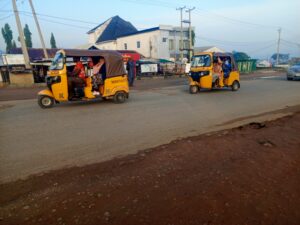
Some residents of the Federal Capital Territory (FCT) say tricycles, popularly known as Keke, have improved community mobility despite challenges facing the transportation sector.
The residents made this known in interviews in Dei-Dei, Kubwa and Dutse, noting that tricycles had become a preferred means of transport because they were affordable, accessible and could navigate areas where larger vehicles could not operate.
Mr Abdullahi Mohammed, a resident of Dei-Dei, said tricycles had made movement within communities faster and more convenient.
“Many roads in our community are too narrow or in poor condition for buses, but tricycles can easily access such areas.
“They also save commuters time by providing direct transportation to their destinations,” he said.
Another resident, Mr Usman Ibrahim, said tricycles had reduced the stress of commuting, particularly on inner roads with limited public transport services.
“Many of us depend on Keke to get to work, markets and health centres because buses do not always operate on these roads,” he said.
Mrs Angela Okoli, a trader in Kubwa, said tricycle operations had also created employment opportunities for young people.
According to her, many youths earn a living as tricycle operators, while others benefit through vehicle maintenance, spare parts sales and related businesses.
She, however, noted that rising fuel prices and the high cost of vehicle maintenance had forced many operators to increase transport fares.
A commercial tricycle operator in Dutse, Mr Ayomide Kehinde, identified poor road conditions as one of the major challenges affecting their operations.
He explained that bad roads increased maintenance costs and reduced the lifespan of the vehicles.
“The cost of spare parts has also gone up, making it difficult for operators to maintain their tricycles regularly.
“We spend a lot repairing damaged tyres, shock absorbers and other parts because many community roads are in poor condition,” he said.
Another resident, Amina Salisu, expressed concern over reckless driving by some operators.
She called for stricter enforcement of traffic regulations and regular training for operators to improve road safety.
Other respondents identified traffic congestion, multiple levies and inadequate parking spaces as challenges affecting tricycle operations in many communities.
They appealed to the Federal Capital Territory Administration (FCTA) and relevant transport authorities to rehabilitate roads, regulate fares where necessary and provide a more enabling environment for operators.
The residents said addressing these challenges would improve transportation services, enhance commuters’ safety and strengthen the contribution of tricycles to community development.
Tricycles are restricted from operating on major highways and within Abuja’s city centre under the city’s transport regulations. They are generally permitted to operate in designated areas, satellite towns, communities and residential estates.
The restrictions are intended to reduce the risk of accidents associated with tricycles sharing major expressways with fast-moving vehicles and heavy traffic.