
West Africa’s Secret Weapon: Culture & Entertainment Unite!
Experts Champion Creative Industries, Sports & Tourism for Regional Integration & Economic Boom

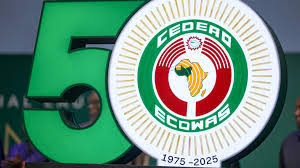
Experts have identified culture, media, sports, tourism, the entertainment and creative industries as vital tools to foster unity and drive regional integration of Economic Community of West African States (ECOWAS).
They said this during the Lagos Chamber of Commerce and Industry (LCCI) ECOWAS@50 regional integration event on Monday in Lagos.
An author, Mrs Aduke Gomez, emphasised the need for the Nigerian government to take the lead in driving economic integration through the media and creative industry.
She advocated investment opportunities tailored to support creativity as a business.
Gomez noted that it was important to see the entertainment and creative industry as a business and a soft power tool to be harnessed to drive regional integration.
“It is important to see the industry as a business that can be invested in with great returns.
“Also, women have been good economic drivers, and the overlooking of women’s contribution to the economy must be stopped as we expend all efforts to drive intra-African trade,” she said.
A leadership development consultant, Ms Isioma Utomi, stressed the need to prepare the next generation – the youth, for the new levels of business in entertainment and tourism.
She stressed the need for speaking other languages within the region to drive integration and enhance cooperation.
Utomi stated that technology must be leveraged to support conversations by ECOWAS member states.
She also advocated active efforts to support businesses.
“Workplaces must be designed to help women progress and be seen at the top of the ladder, as well as to actively support transition for women.
“ECOWAS as a regional organisation must have more women in their leadership positions,” she said.
The Chairperson, Creative and Entertainment Group, LCCI, Dr Ngozi Omambala, stressed the need to start to attach financial numbers to the creative and entertainment industry.
Omambala noted that in 2024, Lagos generated $71.6 million in revenue from the “Detty December” festivities, primarily driven by tourism, hospitality, and entertainment sectors.
This development, she said, showed that the potential of the creative industry was huge.
“If we continue to showcase what we do to drive the economy, investments would certainly come through.
“Also, more women are coming up with different energies and concepts, hence the role of women within the sector must be harnessed to support regional integration.
“It is important for ECOWAS to wake up and adapt to these changes.
“The only way we can speak to the youth is to speak the language they understand, such as sports, which can be a uniting factor in ECOWAS integration,” she said.
The President, LCCI, Mr Gabriel Idahosa, said the Africa Continental Free Trade Area (AfCFTA) presented opportunities that ECOWAS member states could not afford to miss.
Idahosa said that by aligning with the AfCFTA, ECOWAS could unlock the potential of the African market, creating a seamless trading environment that benefits businesses across the region.
He stated that the journey towards a peaceful, secure, and prosperous ECOWAS sub-region was well underway in spite of the challenges.
He noted that despite the challenges, the opportunities were vast.
“Together, through continued cooperation, strategic investment, and shared commitment to peace and security, we can create a brighter future for all citizens of the ECOWAS region,” he said. (NAN)