

Experts say power instability could threaten Nigeria’s $1bn steel deal with India
Ministry of Steel Development signs MoU in Kolkata, but analysts warn power instability could derail implementation

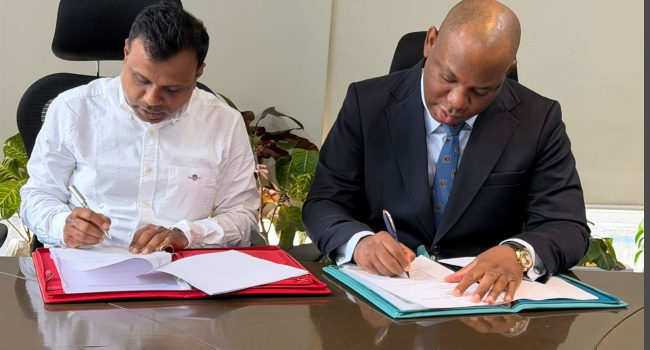
Nigeria’s Ministry of Steel Development has signed a Memorandum of Understanding with India’s Rashmi Metaliks Group for a projected $1 billion investment in the country’s steel sector over the next three years.
The agreement, signed in Kolkata following high-level official engagements, is part of the federal government’s strategy to reduce Nigeria’s dependence on imported steel, currently estimated at $10 billion annually, and strengthen local industrial capacity.
Minister of Steel Development, Shuaibu Abubakar Audu, described the signing as a major milestone, saying the deal would help reposition the sector and shift Nigeria from raw material exports toward value-added industrial production.
The ministry said the investment is expected to attract foreign direct investment, expand domestic steel output, create thousands of jobs, and support Nigeria’s ambition to become Africa’s leading steel hub by 2030.
However, the excitement surrounding the deal has been tempered by expert warnings over a familiar obstacle electricity. Economic analyst Dr. Emmanuel Eche of the Federal University, Wukari, cautioned that Nigeria’s chronically unstable power supply could significantly undermine the viability of large-scale steel manufacturing. Steel production is one of the most energy-intensive industrial processes, requiring continuous and high-capacity electricity to remain operational and cost-effective. Without a reliable power solution, Dr. Eche warned, the project risks delays, inflated costs, and underperformance.
The concern is not new. Nigeria has a long record of ambitious industrial announcements that struggle at the implementation stage due to infrastructure deficits, with the abandoned Ajaokuta Steel Complex serving as the most prominent cautionary tale.
If the Rashmi Metaliks deal is to deliver on its promise, analysts say the government must go beyond the signing ceremony and present a credible plan to tackle the energy challenge that has historically held back industrial growth in the country.