
Experts push technology to boost food security
Experts advocate innovation to tackle hunger

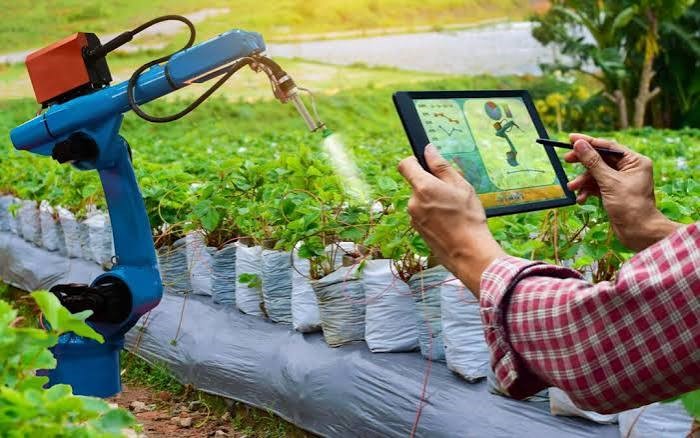
Stakeholders in agriculture, research and food regulation have called for stronger food safety measures, improved processing and technology-driven farming to tackle hunger and strengthen Nigeria’s food systems.
They made the call at a conference organised by the Hope for Life Initiative (HFLI), in partnership with the Nigerian Institute of International Affairs (NIIA) and the Federal Institute of Industrial Research, Oshodi (FIIRO), in Lagos to mark the 2026 World Food Day.
The event was held under the theme, “Hand in Hand for Better Foods and a Better Future,” with discussions focusing on food safety, agricultural innovation and collaboration to improve food security.
The convener and Executive Director of HFLI, Mr Kendi Aig-Imoru, said the initiative was working with partner organisations to address hunger and improve access to adequate food for Nigerian families.
He said the organisation was raising awareness and expanding community-based interventions to achieve sustainable results.
“Our key focus is zero hunger, ensuring that no child goes to bed hungry and that families can feed themselves.
“Even in your small garden, grow something that can provide food,” he said.
Aig-Imoru emphasised the contributions of women farmers to food production and household nutrition, describing their role as essential to achieving food security.
He called for stronger partnerships among farmers, government agencies, research institutions and private organisations.
“We need to celebrate what women and farmers are doing because Nigerian farmers are resilient.
“For us to achieve zero hunger, we have to partner with one another and collaborate,” he said.
The Director-General of the National Agency for Food and Drug Administration and Control (NAFDAC), Prof. Mojisola Adeyeye, represented by a regulatory officer, Mr Jangnan Amos, urged farmers and food processors to comply with international best practices to ensure food safety.
Adeyeye said the agency had introduced digital platforms to simplify product registration, enhance regulatory services and improve compliance among businesses.
She cited the NAFDAC Automated Product Administration and Monitoring System (NAPAMS), which enables businesses to register products online.
She also highlighted the agency’s digital regulatory information management services and the Post-inspection Data Capture and Risk Management System (PCAMS), which supports regulatory processes for imported products.
According to her, the initiatives are designed to improve regulatory efficiency and ensure the availability of safe food products.
“We need to build a food system where every producer takes care, every regulator acts with purpose, every consumer is informed, and every innovation serves the public good,” she said.
Also speaking, the President of Netcom Africa and Board Member of Ignitia, Mr Yen Choi, highlighted the importance of technology in improving agricultural productivity, managing risks and protecting farmers’ investments.
Choi said agricultural technology should focus on solving farmers’ practical challenges rather than merely introducing digital applications and equipment.
He identified reliable weather forecasts as essential for determining planting schedules, organising labour, planning transportation and storage, and improving farmers’ earnings.
He said Ignitia provided weather forecasting information to farmers in Nigeria to help them prepare for changing weather conditions.
“We cannot control the weather, but we can prepare for it.
“When we talk about innovation, we should begin with the farmer’s problems, not the technology. The most important word is useful,” he said.
The South-West Regional Coordinator of the Nigerian Export Promotion Council (NEPC), Mr Benedict Itegbe, urged farmers and agro-processors to meet established standards to improve the competitiveness of Nigerian agricultural products in international markets.
Represented by a lawyer, Mr Temitope Hassan, Itegbe reaffirmed the council’s commitment to supporting exporters and promoting innovation to strengthen food security and diversify the national economy.
A research officer at FIIRO, Mr Adeola Akanbi, said improving food security and nutrition required stronger collaboration among research institutions, government agencies, industries, development organisations and local communities.
He identified post-harvest losses, inadequate processing facilities and the high cost of nutritious food as major challenges confronting Nigeria’s food systems.
Akanbi said science, technology, innovation and strategic partnerships were necessary to maximise the value of agricultural produce and improve access to affordable, nutritious food.
He added that FIIRO was promoting food processing, preservation, product development and technology transfer to convert locally available raw materials into valuable products.
“Research must translate into practical solutions that improve lives.
“By supporting local food processing, reducing food losses and promoting affordable nutritious food products, we can contribute to a more resilient food system and improve nutritional outcomes for Nigerians,” he said.