

7 Signs You’re Selling Features Instead of Outcomes
Customers don't buy product features. They buy the results those features help them achieve. Here's how to tell if your messaging needs a shift.

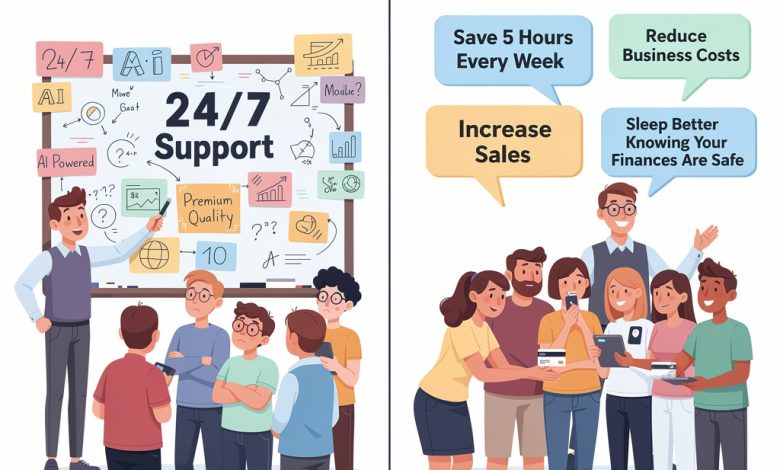
What You Need to Know
Your product may be excellent. Your service may genuinely solve a problem. Yet your customers keep saying things like, “I’ll think about it,” “I’ll get back to you,” or “It’s too expensive.” The problem may not be your product. It may be your message.
Also, many entrepreneurs spend so much time selling features and explaining what their products do that they forget to explain why customers should care.
Customers rarely buy features. They buy outcomes.
A customer doesn’t buy accounting software because it generates reports. If at all, they buy it because they want to spend less time on paperwork and more time growing their business.
Therefore, if your marketing focuses more on what your product has than what your customer gains, these signs may sound familiar.
7 Signs You’re Selling Features Instead of Outcomes
1. You Spend More Time Explaining Than Connecting
When customers ask about your product, your first instinct is to list features.
“It has 24-hour support.”
“…comes with five modules.”
“…uses premium materials.”
Those details matter, but customers first want to know how those features improve their lives.
Instead of saying, “Our chairs are ergonomically designed,” tell them, “You’ll finish a full workday without back pain.”
2. Your Customers Always Ask, “So What?”
Not in the literal sense. But if people keep asking follow-up questions after your pitching, they may still be trying to understand why your product matters.
Every feature should answer one question:
“What does this do for me?”
If it doesn’t, you’re leaving work for the customer to do.
3. Your Marketing Sounds Like Everyone Else’s
“We offer quality.”
“…provide excellent service.”
“…have experienced professionals.”
Almost every business says these things.
Outcomes are much harder to copy.
“Helping busy entrepreneurs reclaim five hours every week” is far more memorable than “high-quality business support.”
4. Price Becomes the Main Conversation
When customers cannot see the value of an outcome, they compare prices instead.
That’s why two businesses can sell similar products at completely different prices.
One sells the product.
The other sells the transformation.
People don’t pay premium prices for features.
They pay for meaningful results.
5. Your Testimonials Talk About You, Not the Customer
Read your customer reviews.
If they mainly say things like “Great service” or “Professional staff,” you are missing an opportunity.
The strongest testimonials describe what changed after using your product.
“We doubled our monthly sales by 20%.”
“I finally stuck to my savings plan.”
“I finished projects in half the time.”
Those are outcomes, not just features.
6. Customers Struggle to Explain What You Do
If your customers cannot easily recommend your business to someone else, your messaging may be too product-focused.
People remember transformations more than technical details.
Instead of saying, “We build customised inventory management systems,” a customer is more likely to remember, “They help businesses stop losing money through poor stock management.”
The second message is easier to repeat because it focuses on the result.
7. You’re Talking More Than You’re Listening
The best salespeople spend less time selling features or describing products and more time discovering customer motives.
Why is the customer buying?
What problem are they trying to solve?
What outcome are they hope to achieve?
The answers should shape your sales pitch.
What This Looks Like in Real Life
A good example is PiggyVest.
The company could have promoted itself by talking about bank-level security, automated savings features and investment options.
Those features are important, but they were never the centre of its message.
Instead, PiggyVest consistently focused on outcomes.
It showed Nigerians how disciplined savings could help them pay school fees, build emergency funds, start businesses and achieve financial goals.
The platform wasn’t selling a savings app.
It was selling financial discipline, peace of mind and progress.
That difference helped PiggyVest stand out in a crowded fintech market.
The lesson for entrepreneurs is simple.
Customers don’t wake up wanting features.
They wake up wanting solutions.
Conclusion
The next time you write a social media post, prepare a sales pitch or update your website, challenge yourself.
For every feature you mention, ask one question:
“What does this help my customer achieve?”
If you cannot answer that question immediately, your customer probably can’t either.
The entrepreneurs who consistently win customers are not always those with the most features.
They are the ones who communicate the clearest outcomes.
Because at the end of the day, customers are not buying your product.
They are buying a better version of their current situation.