

Brand Archetype Strategy: Which One Fits Your Business?
Match your brand archetype to what your market responds to

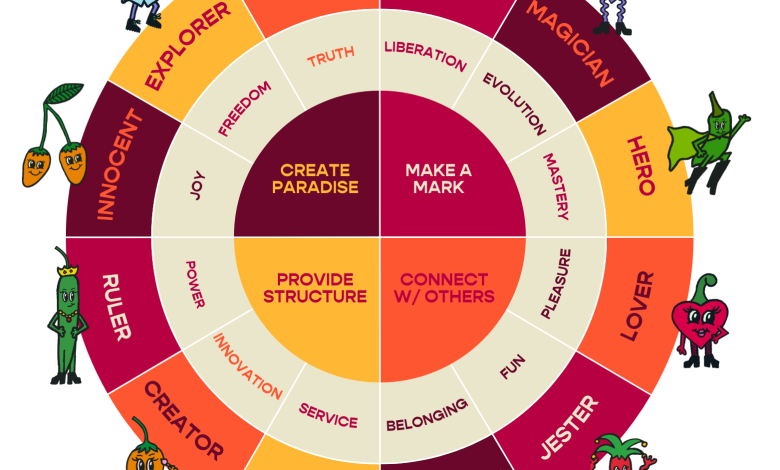
Two accounting firms serve the same market. One talks like a university professor: formal, technical, expertise-heavy. The other talks like your helpful uncle: accessible, reassuring, practical. While they’re both in the same service, they have wildly different personalities. The one that wins depends entirely on who their customers are.
Your brand personality isn’t about being creative or quirky. It’s about matching how you communicate to what your specific market responds to. Get it right and you build trust faster. Get it wrong and you confuse people even if your service is excellent.
The framework to get this right is called Brand archetype strategy which gives you a breakdown on how to to be consistent yourself in a way your market actually connects with.
What Brand Archetypes Mean
Archetypes are personality patterns humans recognise instinctively. The wise teacher. The caring helper. The confident leader. The relatable friend. These patterns show up across cultures and stories because we’re wired to understand them.
In business, your brand archetype is the personality your brand consistently projects. Not what you sell, but how you show up. Two restaurants selling the same food can have completely different archetypes: one is the expert chef teaching you about ingredients, the other is the warm host making you feel at home.
This matters because people buy from brands that feel familiar and trustworthy. Consistency in personality builds that trust. If you’re warm and friendly on social media but cold and formal in emails, customers feel the disconnect and don’t fully trust you. This means that your personality has to be the same across all touchpoints to maintain that sanse of familiarity.
Small businesses often skip this, swinging between different tones depending on mood or who’s writing content that day. Your receptionist sounds caring but your sales materials sound corporate.
The Four Brand Archetypes That Work for Most Small Businesses
Forget the 12-archetype academic framework. Most small businesses fit naturally into one of four patterns.
1. The Expert (Sage):
You’re the knowledgeable authority teaching customers. You value competence, accuracy, and depth of understanding. You communicate with confidence backed by expertise. Your customers come to you because you know more than they do and can guide them correctly.
Best for: Professional services, technical products, B2B, industries where mistakes are expensive (legal, medical, financial, engineering).
2. The Caregiver:
You’re the helper focused on customer wellbeing and support. You value service, reliability, and making people feel cared for. You communicate with warmth and reassurance. Your customers come to you because they trust you’ll take care of them.
Best for: Healthcare, childcare, elder care, hospitality, personal services, support-intensive businesses.
3. The Regular Person (Everyman):
You’re the relatable, down-to-earth business that feels like them. You value accessibility, honesty, and no-nonsense practicality. You communicate like a conversation with a friend. Your customers come to you because you don’t make them feel inadequate or confused.
Best for: Retail, food services, local businesses, commodity products where personality differentiates.
4. The Ruler (Leader):
You’re the premium, high-status choice that represents success. You value excellence, exclusivity, and results. You communicate with confidence and authority. Your customers come to you because associating with your brand elevates their status.
Best for: Luxury goods, high-end services, executive/corporate solutions, aspirational products.
Matching Your Market to Your Brand Archetype
Your archetype isn’t about what you like. It’s about what your market responds to.
1. Consider who your customers are.
Are they corporate executives making high-stakes decisions? They respond to Expert or Ruler archetypes. Young parents worried about their children? Caregiver resonates. Small business owners watching budgets? Regular Person connects.
2. Think about what they value most.
If they value competence above all such as medical services, legal work, technical consulting, then consider the Expert archetype. If they value feeling understood and supported (therapy, elder care, education), be a Caregiver.
Living Your Brand Archetype Consistently
1. Communication style shifts by archetype.
Expert: Educational tone. “Here’s what you need to understand about…” Uses specific terminology correctly. Share insights, analysis and demonstrate depth of knowledge.
Caregiver: Supportive tone. “We’re here to help you through…” Use reassuring language, acknowledges emotions and emphasise reliability and care.
Regular Person: Conversational tone. “Look, here’s the deal…” Use everyday language, admits when things are complicated and emphasise honesty and value.
Ruler: Authoritative tone. “This is how we ensure excellence…” Use confident language, focuse on results and standards and reinforce quality and status.
Find Your Natural Fit
1. Look at your best client relationships.
What personality did they respond to? When did they say “This is exactly what we needed.” was it after you explained something expertly, made them feel cared for, gave them straight talk, or delivered premium results?
2. Examine what you’re naturally good at.
If you love teaching and explaining, Expert is natural. Or if you instinctively check in and support, Caregiver fits. Do you cut through complexity to simple truth? Then, Regular Person might be your fit. If you drive toward excellence and results, Ruler.
3. Test consistency.
Pick the archetype that feels most authentic to how you already operate at your best. Write three pieces of content in that voice: social post, email, and service description. Does it feel natural? Would your best customers recognise you in it?
Your brand archetype strategy shouldn’t require performing a personality. It should be recognising and consistently expressing who you already are in a way your market connects with.
Conclusion
Choose your brand archetype based on your market and natural strengths. Rewrite one key piece of content: your About page, service description, or most-used email template, in that consistent voice.
Ask someone who knows your business: “Does this sound like us?” If yes, you’ve found your fit. Apply that voice to all customer touchpoints over the next month.