
Farmers seek government intervention as poultry costs soar
Poultry farmers battle rising costs, falling demand

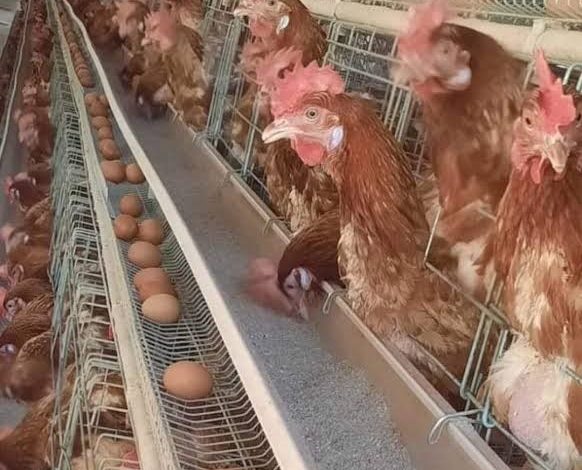
Poultry farmers in Nigeria are facing mounting operational challenges as rising feed prices, declining consumer purchasing power and other production costs threaten the sustainability of their businesses.
“Feed now accounts for about 75 per cent of production cost, making it impossible for farmers to break even when consumers cannot afford the products,” he stated.
Mrs Funmi Ajayi, a broiler seller at Oja Oba Market in Ado-Ekiti, said her daily sales had dropped significantly from 100 birds to barely 30.
She attributed the decline to reduced purchasing power, noting that the price of a medium-sized chicken had risen from N3,500 to N7,000, while customers were only willing to pay N4,000.
“People don’t have money to buy. Farmers now struggle to sell or even offer birds on credit,” she said.
Dr Femi Olabode, a veterinary doctor in Ikere-Ekiti, said some feed millers were compromising feed quality to maximise profits.
He explained that maize, which should constitute about 50 per cent of poultry feed, was sometimes reduced to 35 per cent, affecting the growth and productivity of birds.
According to him, the development has resulted in poor weight gain among broilers, reduced egg production among layers and increased susceptibility to diseases and mortality.
The Chairman of the Poultry Association of Nigeria (PAN) in the South-West, Oluleye Olugbeja, appealed to the government to address the rising cost of poultry feed.
He called for the release of grains from national reserves at subsidised rates, access to single-digit loans through the Bank of Agriculture and insurance support against disease outbreaks.
He warned that failure to address the challenges could threaten the N4.2 trillion poultry industry, which provides about 25 million jobs.
Dr Joshua Sunday Ayantayo, SIWE Coordinator at the Federal College of Agriculture, Akure, Ondo State, said raising 50 birds to table size now required at least N400,000, excluding mortality and other expenses.
Ayantayo, who is also a poultry farmer, said the rising cost of feed and medication had forced some farmers to compromise vaccination schedules, while others had reduced their flock sizes.
He said farmers who previously raised 1,000 birds were now keeping about 500, while those with 500 had reduced their stock to approximately 300.
Ayantayo urged the government to subsidise feed production and empower farmers cultivating raw materials, particularly maize.
He added that feed prices would remain high as long as Nigeria continued to depend on imported maize for a significant portion of poultry feed production.
However, Mr Tayo Ayorinde, Chief Executive Officer of Wholesome Chicken Farm, Akure, identified poor farm management, disease outbreaks, inadequate marketing strategies and corruption in government intervention programmes as other factors forcing poultry farmers out of business.
Although acknowledging the rising cost of production, Ayorinde argued that high feed prices and other input costs should not be considered the sole reasons for farmers abandoning their businesses.
He said poultry farmers could remain profitable by maintaining proper production standards and adopting effective marketing strategies.
According to him, some farmers suffer losses because they fail to make adequate marketing arrangements before producing large quantities of birds.
He also identified disease outbreaks, soldier ant attacks, vaccine failure and theft as challenges capable of undermining poultry businesses.
Ayorinde advised farmers to prioritise farm hygiene and biosecurity measures to protect their birds against infections and other diseases.
He added that theft of birds and other farm resources could significantly reduce expected returns.
While acknowledging government efforts to support farmers through various intervention programmes, he expressed concern that corruption and diversion of resources had weakened their effectiveness.
Similarly, Mrs Aminat Olaitan, owner of Olajesu Farm, a retail poultry inputs store in Akure, said rising feed and input costs had reduced demand and customer patronage.
Olaitan said a bag of finisher feed now sold for between N22,000 and N24,000, compared with N16,000 to N18,000 previously, depending on the brand.
She said her weekly sales had dropped from between eight and 10 bags to barely four.
Olaitan called on the government to intervene by addressing high transportation costs and subsidising poultry production inputs.
Mrs Abiola Fakinlede, a major poultry feed seller and Chief Executive Officer of PearlFak Limited in Arakale, Akure, attributed rising feed prices partly to high diesel costs and poor road infrastructure.
She explained that feed manufacturers relied heavily on diesel to operate their plants, while deteriorating roads increased transportation delays and costs.
According to her, feed prices experienced a brief decline before July but had maintained a steep upward trend since then.
She said prices sometimes changed more than once within a week, reflecting inflationary pressures across the entire market.
Fakinlede noted that many farmers could no longer afford full bags of feed and had resorted to purchasing half bags, forcing them to ration feed for their birds.
She said the practice had contributed to declining egg production and forced many small-scale farmers to reduce their flock sizes.
To address the situation, Fakinlede urged the government to subsidise raw materials, stabilise fuel and diesel prices, rehabilitate bad roads and improve security in agricultural communities.