
Stakeholders push traditional foods to improve nutrition
Experts seek greater investment in indigenous crops

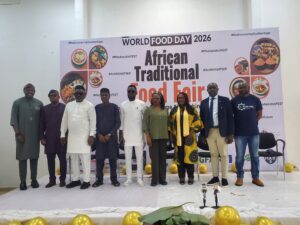
Food experts and agricultural stakeholders have called for increased investment in indigenous food production to reduce food imports, tackle malnutrition and strengthen Nigeria’s food sovereignty.
The stakeholders made the call on Friday at the opening of the 8th African Traditional Food Fair, also known as the Mba’Apostoli Food Festival, in Abuja.
The two-day event, holding from Oct. 16 to Oct. 17 at the FCT Exhibition Pavilion, is part of activities marking the 2026 World Food Day.
It has the theme, “Food for Tomorrow: Reviving Indigenous Foods for Healthy Living, Climate-Resilient and Food-Secure Nigeria”.
The stakeholders emphasised the need to strengthen local food systems to reduce dependence on imported food, protect indigenous agriculture and improve national nutrition.
Mr Michael Terungwa, Executive Director of the Global Initiative for Food Security and Ecosystem Preservation (GIFSEP), said Nigeria needed to prioritise local food production to reduce its reliance on imports.
He said food security went beyond producing sufficient quantities, stressing the importance of local control over food production, distribution and consumption.
“The battle for food in Nigeria, and indeed Africa, is not just about producing enough food.
“It is about who controls what we grow, who controls what we eat, how our food system is managed, and who benefits from the food economy,” he said.
Terungwa said food sovereignty required policies that enabled farmers to earn sustainable incomes, strengthened local markets and encouraged Nigerians to appreciate indigenous foods.
He said Nigeria imported food worth N7.6 trillion in 2025, attributing the country’s dependence on imported food partly to inadequate investment in local production.
Citing palm oil production, he said Nigeria produced about 1.4 million tonnes annually against an estimated demand of 2.5 million tonnes.
He said the deficit highlighted the need to increase investment in agriculture to meet the needs of the country’s growing population.
“If we cannot feed ourselves now that we are 230 million, what happens when we get to 400 million people?” he asked.
Terungwa noted that traditional crops and indigenous farming knowledge could improve food production and help communities adapt to climate change.
He urged state governments to invest in agricultural research and establish seed companies to preserve indigenous crop varieties and ensure farmers had access to locally adapted seeds.
“Every state in this country should have a seed company. Not just seed but traditional seeds to ensure that we continue to enjoy our food,” he said.
He warned that excessive dependence on commercial seed suppliers could undermine food production if supplies became unavailable.
Terungwa also encouraged Nigerians to patronise local food producers, noting that spending on locally produced food would help retain economic value within the country.
In his keynote address, Dr Olumide Ojo, Strategy Director of Propcom+, described indigenous foods as essential to improving nutrition, preserving cultural identity and strengthening resilience to climate change.
He said Nigeria could improve food security and nutrition by combining traditional food knowledge with scientific research and modern innovation.
“My proposition is simple. At the end of this speech, we do not have to choose between heritage and innovation. We can innovate with our heritage,” he said.
Ojo identified millet, sorghum, cowpeas, bambara nuts and indigenous leafy vegetables as examples of traditional foods with significant nutritional and agricultural benefits.
“Our heritage offers that range and diverse food aspects,” he said, highlighting the nutritional value of indigenous foods.
He explained that diets relying on a limited variety of staple foods could leave children deficient in essential nutrients, even when their calorie requirements were met.
“A diet built on a narrow range of staples can fill the stomach and still leave children short of protein and micronutrients,” he said.
Ojo added that several indigenous crops could help farmers cope with changing weather conditions and unpredictable rainfall patterns.
Earlier, Aveseh Asough, founder and convener of the festival, said the annual event began in Abuja in 2019 to reconnect people with their cultural heritage through food.
She explained that the name Mba’Apostoli was inspired by small yams that fell from larger tubers during harvesting.
“As children, following our parents to the farms, we would be picking the little drop-offs from the yams and roast them in the fires and then eat them on the farms,” she said.
Asough said the gathering had evolved from a celebration of Mba’Apostoli yams into a broader African traditional food fair.
She added that the festival provided a platform to celebrate indigenous foods and preserve the stories, cultural practices and traditions associated with them.
The event featured goodwill messages from partners, a dance performance, presentation of gifts to partners and the unveiling of the festival’s meal.