Bring-It-to-Me Mindset in Ilorin: Why Local Businesses Must Deliver More Than Just Products
Consumer expectations in Ilorin are evolving. Here’s how your business can meet the demand for convenience, speed, and digital-first service.

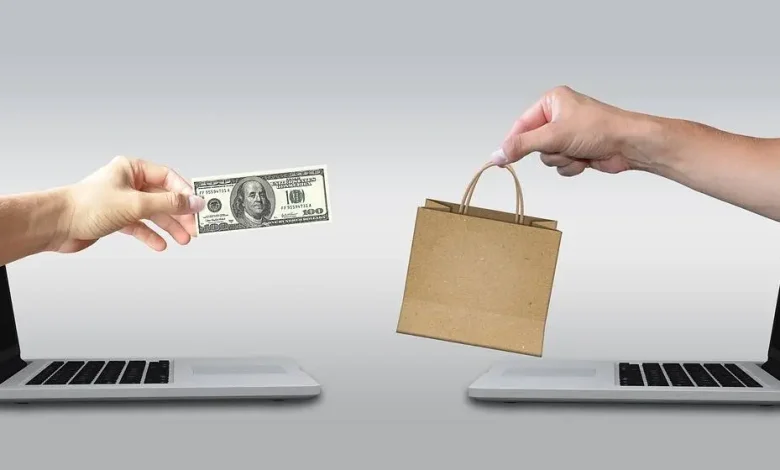
The bring-it-to-me mindset in Ilorin is no longer a prediction—it’s the new reality. In Ilorin today, customer loyalty is no longer just product quality or friendly service. Of course, there are still important factors that customers look out for and appreciate. However, recent trends in consumer behaviour have shown that consumers care a lot about convenience. As a business owner, if you can’t meet customers where they are or bring your offer directly to them, they’ll move on.
What then is this shift about? This shift is known as the “bring-it-to-me” mindset. It is one of the strongest behavioural changes McKinsey observed in their “State of the Consumer 2025: When disruption becomes permanent” report.
Globally, this means that consumers now expect faster delivery, easier access, and less stress when buying. Thus, bringing this home, as a business owner in Ilorin, your customers expect your brand provide faster delivery, easier access, and less stress during their purchasing activities.
As a matter of fact, here in Ilorin, the change is subtle but growing. Whether it’s ordering item 7 via the available bar code or booking a makeup artist through WhatsApp, people are choosing speed and ease over tradition.
What Exactly Is the Bring-It-to-Me Mindset?
It is the idea that customers no longer want to “come” to you. They want you to come to them with your products, your value, and your solutions. They don’t want to stress themselves under the scorching sun of Ilorin, going to Oja-Oba market or Sunday Sunday market when your brand can easily bring it to their doorsteps.
According to McKinsey’s report, it showed that:
• Food delivery jumped from 9% to 21% of total food spending globally from 2019 to 2024.
• Over 80% of consumers in surveyed regions used online-only retailers recently.
• Frictionless, fast service is now the expected baseline.
This also means that here in Kwara;
• Customers now expect businesses to accept online payments.
• Online orders are fast becoming normal.
• Logistics is the new storefront for many local vendors.
What Convenience Looks Like to Your Customers
1. Speed: The bring-it-to-me mindset in Ilorin says that your customers want a fast response time on whatever online platforms you are using. They want almost immediate or next-day delivery. They want immediate order/payment confirmations.
2. Simplicity: The new shift in consumer behaviour doesn’t require tedious touching points before they eventually buy. Instead, they want a clear ordering process, clickable catalogues, and short payment links.
3. Access: Convenience to your customers means they want to be able to reach you as fast as possible. However, some vendors are so bad at being available to even take an order. Who does that? You’re a business owner, and you also claim to have your business present online, but your customers have to call you five times before reaching you.
4. Flexibility: Can they book, pay, and reschedule without stress?
If you’re hard to reach or your system is clunky, your customer will simply find someone else.
Four Things You Must Do to be Ahead
To be ahead of the new shift of the bring-it-to-mt mindset in Ilorin, do the following:
1. Starting Building Your Business Online
You can start from even WhatsApp especially if it’s suitable for your kind of buisness before movng to other platforms.
- Set up automated replies for FAQs.
- Use catalogue features to display products.
- Add a simplifies payment option such as transfer details or link.
2. Offer Local Delivery, Even If It’s Manual
You don’t necessarily need a logistics company for now. If you can afford it, no problem. Begin by partnering with bike riders, or bolt/independent riders.
3. Streamline the Buying Journey
Don’t make customers jump through hoops just because they want to buy a product from you. You can use short forms such as Google Forms to get the hint of what they want. Also, enusre to accept payments from multiple banks or use Paystack/Moniepoint.
4. Communicate Like a Human
Irrespecive of the “bigness or smallness” of your brand, you can always stand out among others. There are many ways to achieve that and communication tops the list. When it comes to communication, you dont do it as though your receivers are some kind of robots without emotions. Use the language thye understand. Speaak to their pain ponts. Comfirm orders and payments on time.
Conclusion
The bring-it-to-me mindset is not just a global thing. It’s also here in Ilorin. And if your business wants to stay visible and valuable, then you must move with your customers into their phones, their feeds, and their comfort zones.