

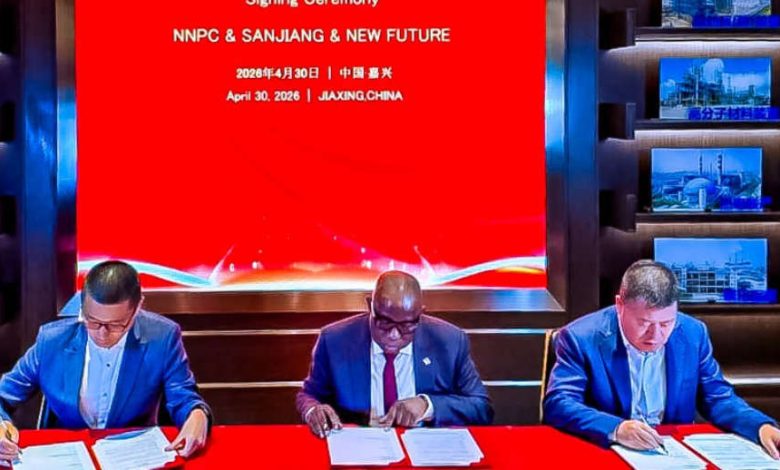
The Nigerian National Petroleum Company Limited (NNPC) has signed a Memorandum of Understanding (MoU) with two Chinese firms to rehabilitate two government-owned refineries that have consumed over $2.4 billion in public funds while delivering little refined fuel output.
The agreement marks a significant shift in Nigeria’s approach to its troubled refinery sector, signaling a growing openness to Chinese industrial capital as the government seeks to convert idle, underperforming assets into functional infrastructure.
Nigeria’s refineries have long been a source of national frustration. Despite being Africa’s largest crude oil producer, the country has relied heavily on imported refined petroleum products for decades, straining foreign exchange reserves and fueling subsidy expenditure.
Previous rehabilitation attempts costing $2.4 billion yielded little measurable improvement, drawing sharp criticism from lawmakers and energy analysts who questioned the transparency and effectiveness of the spending.
Industry observers have described the latest deal as a pragmatic step, noting that Chinese firms have demonstrated strong execution capacity in large-scale industrial projects across Africa. However, analysts have urged clear contractual terms and performance benchmarks to ensure the agreement delivers tangible results.
If successfully executed, the revival of the two refineries could significantly boost Nigeria’s domestic fuel production, reduce import dependence, and create downstream economic opportunities including jobs and local supply chain development.
NNPC is yet to release a full project timeline, but the MoU signing is widely seen as a decisive first step toward addressing one of the most expensive challenges in Nigeria’s energy history.